
PinkPaws Store
Blog Details

Aug 27, 2026
Bored, Not Bad: The Real Reason Your Kolkata Apartment Dog Is Chewing, Barking, and Losing It Every Afternoon
Chewed slippers and afternoon barking usually aren't bad behaviour — they're boredom. Here's a Kolkata-specific, apartment-friendly enrichment routine that actually works, plus what to check before buying puzzle toys.
Bored, Not Bad: The Real Reason Your Kolkata Apartment Dog Is Chewing, Barking, and Losing It Every Afternoon
If you live in a flat in Salt Lake, New Town, Ballygunge, or any of Kolkata's tighter residential pockets, you've probably had this moment: you come home to a chewed slipper, a knocked-over plant, or a dog that greets you like you've been gone for a year — even though it was only forty minutes. Your first instinct is to think your dog is being "naughty." The more likely explanation, backed by how behaviourists actually talk about this, is far less dramatic: your dog is bored.
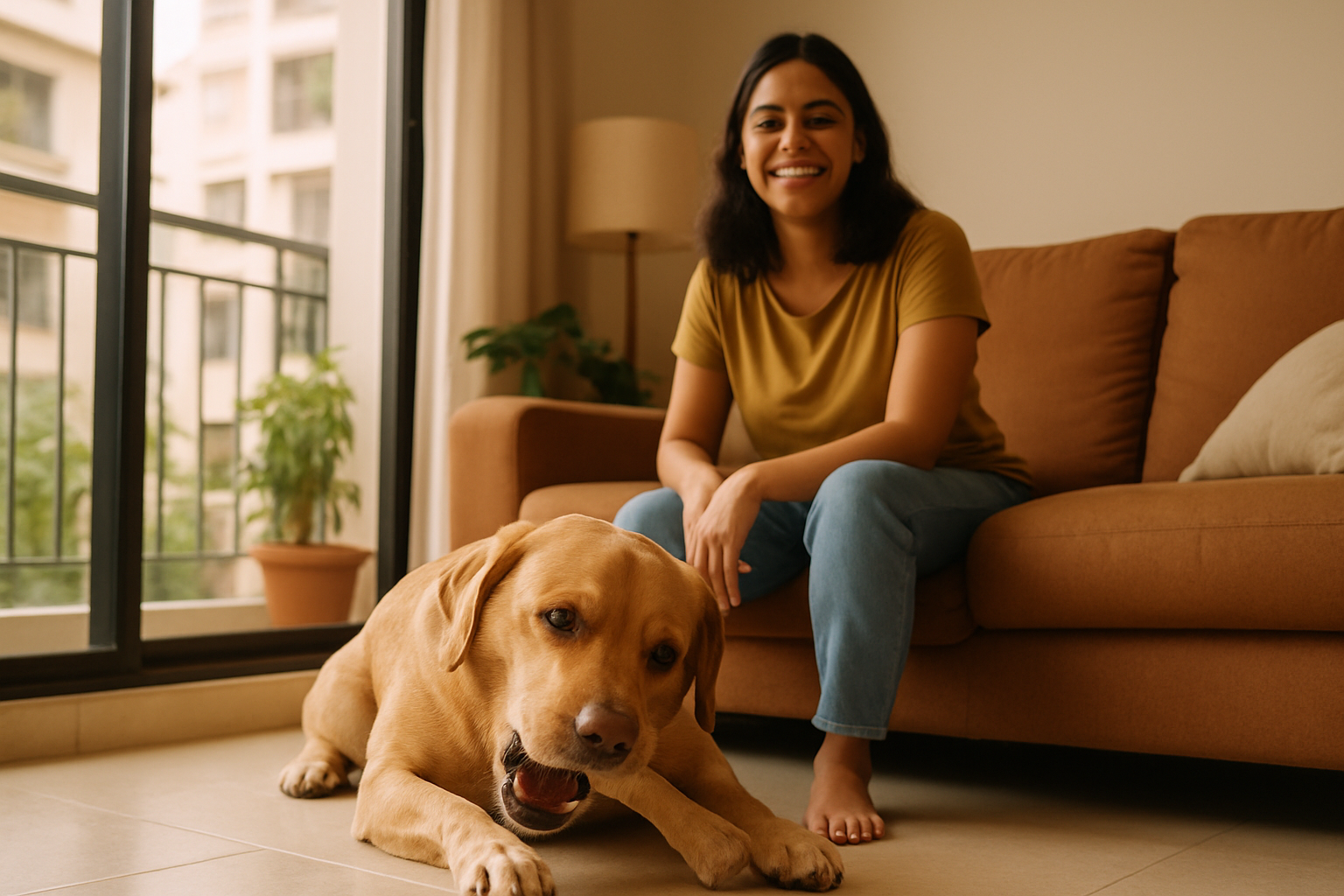
A bored dog is more likely to develop destructive habits, while an anxious dog may whine, tremble, or refuse to eat when left alone. And in a city like Kolkata, the conditions for boredom are almost built into daily life. In Indian households, factors such as long working hours, apartment living, hot summer afternoons that limit outdoor time, and loud festival seasons like Diwali can quickly push dogs toward these behaviours. That's not a Delhi or Mumbai problem — it's a Kolkata one too, especially once monsoon turns the ground-floor patch of grass into a swamp for three months and the only "outdoor time" your dog gets is a rushed lap around the block before the traffic gets bad.
Boredom vs. Anxiety: Why the Difference Actually Matters
Before you buy a single toy, it helps to know which problem you're solving. Trainers who study this distinguish clearly between the two: boredom-related behavioral issues usually improve when a dog's needs for exercise, social interaction, and mental stimulation are met, while anxiety-related behaviors often persist or intensify even when these needs are addressed. A simple way to tell them apart at home: if your dog settles down after you leave and only starts chewing or barking later in the day, that's usually boredom. If the distress starts within minutes of the door closing, that's closer to separation anxiety and needs a different approach altogether — enrichment helps, but it isn't the whole fix.
Most Kolkata pet parents are dealing with garden-variety boredom, not clinical anxiety. Which is good news, because it's the easier of the two problems to solve — and it doesn't require a bigger flat, a garden, or hours of free time.
The Enrichment Gap Nobody's Talking About Locally
Search "dog care Kolkata" and you'll find plenty on tick fever, monsoon hydration, and festival stress — all genuinely useful. What's missing is a straight answer to the question a lot of working pet parents in this city are quietly asking: my dog gets walked twice a day and still seems restless — what am I missing?
The answer, increasingly backed by trainers and vets across India, is mental stimulation — not more physical exercise. Boredom leads to barking, chewing, and anxiety, and the fix isn't a bigger flat — it's smarter enrichment using nose work, puzzle feeders, training games, and scent-based activities you can do entirely indoors. A tired body helps, but a tired brain helps more, and it's far easier to achieve in a 700-square-foot South Kolkata flat than a long, unrealistic evening run in August humidity.
Five Enrichment Habits That Actually Work in a Small Flat
- Scatter feed instead of bowl-feed, at least once a day. Skip the bowl for one meal and scatter kibble across the living room floor. It turns a two-minute meal into a ten-minute nose-work session and costs nothing extra.
- Use a puzzle feeder or slow feeder for regular meals. The best toy is usually a treat-dispensing one or a dog food dispenser puzzle because these keep dogs engaged by offering a continuous reward. It also solves the fast-eater problem many Indian dog parents deal with, especially with kibble-only diets.
- Rotate toys weekly instead of leaving everything out at once. A toy that's always visible stops registering as interesting. Put three-quarters of your dog's toys away and swap them out—the "new" toy gets far more engagement than it did the first time around.
- Play hide-and-seek with treats or with yourself. Ask your dog to stay, hide behind a wardrobe or door, and call them. This uses scent, problem-solving, and memory all at once, and it's a game apartment dogs across Indian cities genuinely respond to.
- Freeze a lick mat or stuffed toy on hot or housebound days. When Kolkata's heat or a heavy monsoon downpour rules out a proper walk, a frozen enrichment toy buys you twenty to thirty minutes of calm, focused chewing—much better than a dog pacing at the door.
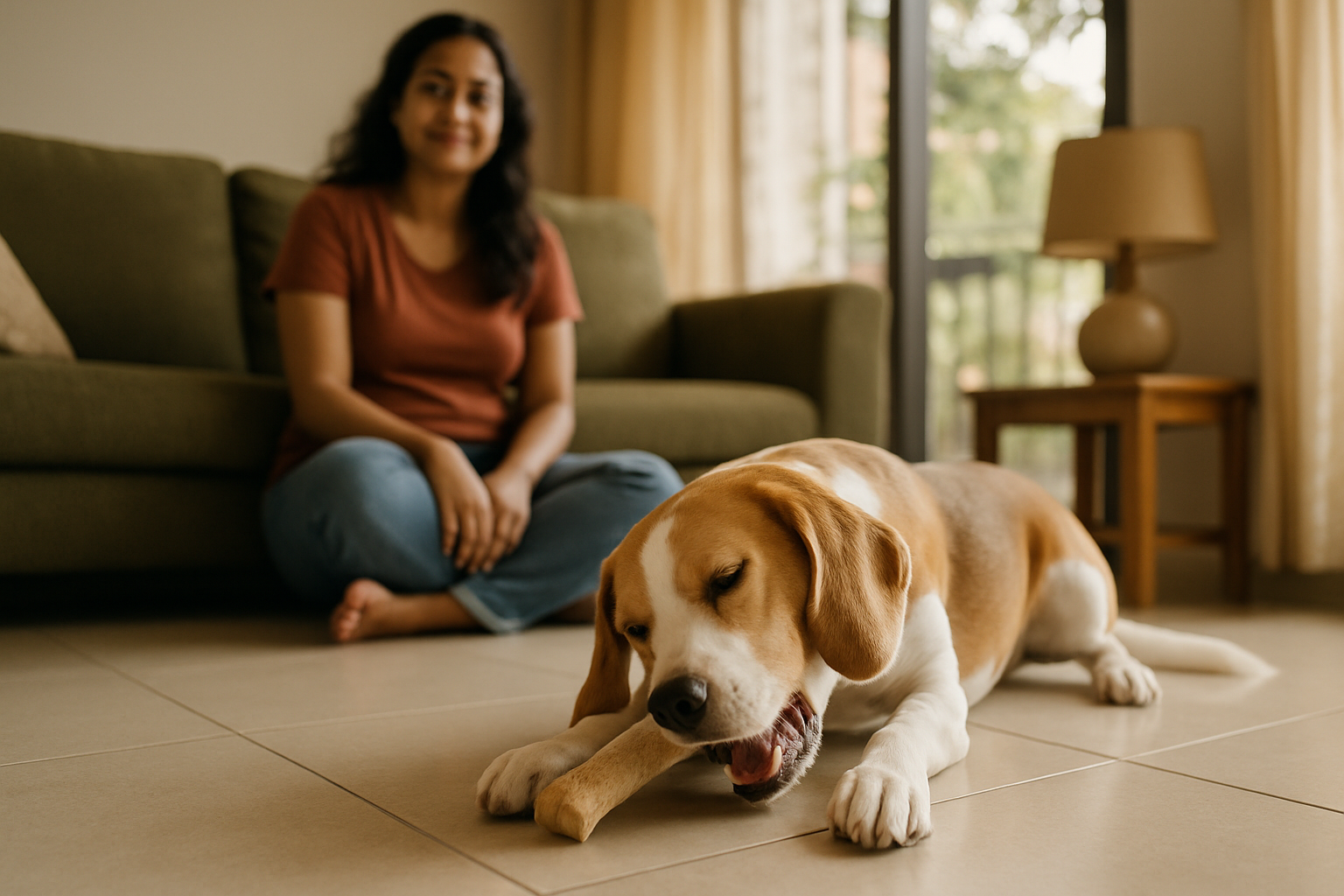
The payoff isn't just a quieter afternoon. Many of these toys double as feeders, making mealtime last 20 minutes instead of 20 seconds, and ten minutes of mental work can be as tiring for a dog as a 30-minute walk around the block. For anyone juggling a work-from-office schedule and a dog who only gets walked by house help during the day, that's a genuinely practical trade.
Buying Enrichment Toys Without Wasting Money
Not every "puzzle toy" on a shelf is actually a good match for your dog, and this is where a lot of first-time buyers overspend on the wrong thing. A few things worth checking before you add to cart:
- Match difficulty to your dog's persistence, not just their size. A food-motivated Labrador or Indie will solve a beginner puzzle in under a minute and lose interest; a nervous or older dog may need an easier version to build confidence first.
- Check chew strength, not just cuteness. Soft plastic puzzles that are fine for a small breed can be destroyed — and become a choking hazard — for a determined chewer.
- Supervise the first few sessions with anything new. This matters more than it sounds; the goal is problem-solving, not a toy that gets chewed into pieces and swallowed.
- Don't ignore cats. Enrichment isn't just a dog-toy conversation — feather wands, treat-dispensing balls, and scratch-and-sniff mats matter just as much for indoor cats, who get even less environmental variety than dogs on leash walks.
It's also worth timing this for the season ahead: enrichment toys double as one of the few reliable tools for getting a dog through Kali Puja and Diwali without a full-blown panic response to fireworks, since a dog focused on a puzzle is a dog with less spare attention for the noise outside.
Frequently Asked Questions
Is enrichment only necessary for "smart" or working dog breeds?
No. Every dog, from a Beagle to a street-rescued Indie, benefits from mental stimulation — it's not breed-specific, it's species-specific. Dogs are natural foragers and problem-solvers regardless of pedigree, and the boredom-driven chewing and barking common in Indian apartment dogs shows up across breeds and mixed breeds alike.
How much enrichment does my dog actually need each day?
There's no fixed formula, but 15–20 minutes of focused mental work (a puzzle feeder, scatter feeding, or a hide-and-seek session) alongside regular walks is a realistic daily target for most apartment dogs, and it's far more achievable than trying to add another long walk to your schedule.
My dog completely ignores puzzle toys — what am I doing wrong?
Start easier than you think you need to. Many dogs give up on a puzzle in the first attempt if it's too hard, and won't try again. Begin with an easy-level feeder or an open scatter-feed, and only increase difficulty once your dog is reliably engaging.
Do cats need this kind of enrichment too?
Yes — arguably more so, since indoor cats get almost no environmental change day to day. Feather wands, treat-dispensing balls, and window perches for bird-watching all serve the same purpose that puzzle feeders serve for dogs.
Can enrichment toys replace a proper walk?
No, and they're not meant to. Physical exercise and mental enrichment solve different problems — enrichment reduces boredom-driven destruction and restlessness, but dogs still need physical movement for muscle health, joint health, and basic cardiovascular fitness. Think of enrichment as an addition to your routine, not a substitute for it.