
PinkPaws Store
Blog Details
Aug 27, 2026
Why Your Cat's Litter Box Smells Worse in Kolkata Than Anywhere Else?
A climate-specific buying guide to clumping, crystal, tofu, and plant-based cat litters — and why Kolkata's year-round humidity changes which one actually works for your home.
Why Your Cat's Litter Box Smells Worse in Kolkata Than Anywhere Else
If you've ever switched cities and noticed your cat's litter box suddenly reeking within a day of a fresh scoop, it's not your imagination and it's not a "bad batch" of litter. It's Kolkata's air. This city sits at roughly 70-90% relative humidity for most of the year, not just during the monsoon, and that moisture changes how every single type of cat litter behaves — how fast it clumps, how quickly it smells, and whether it grows mould in the bag before you've even opened it.
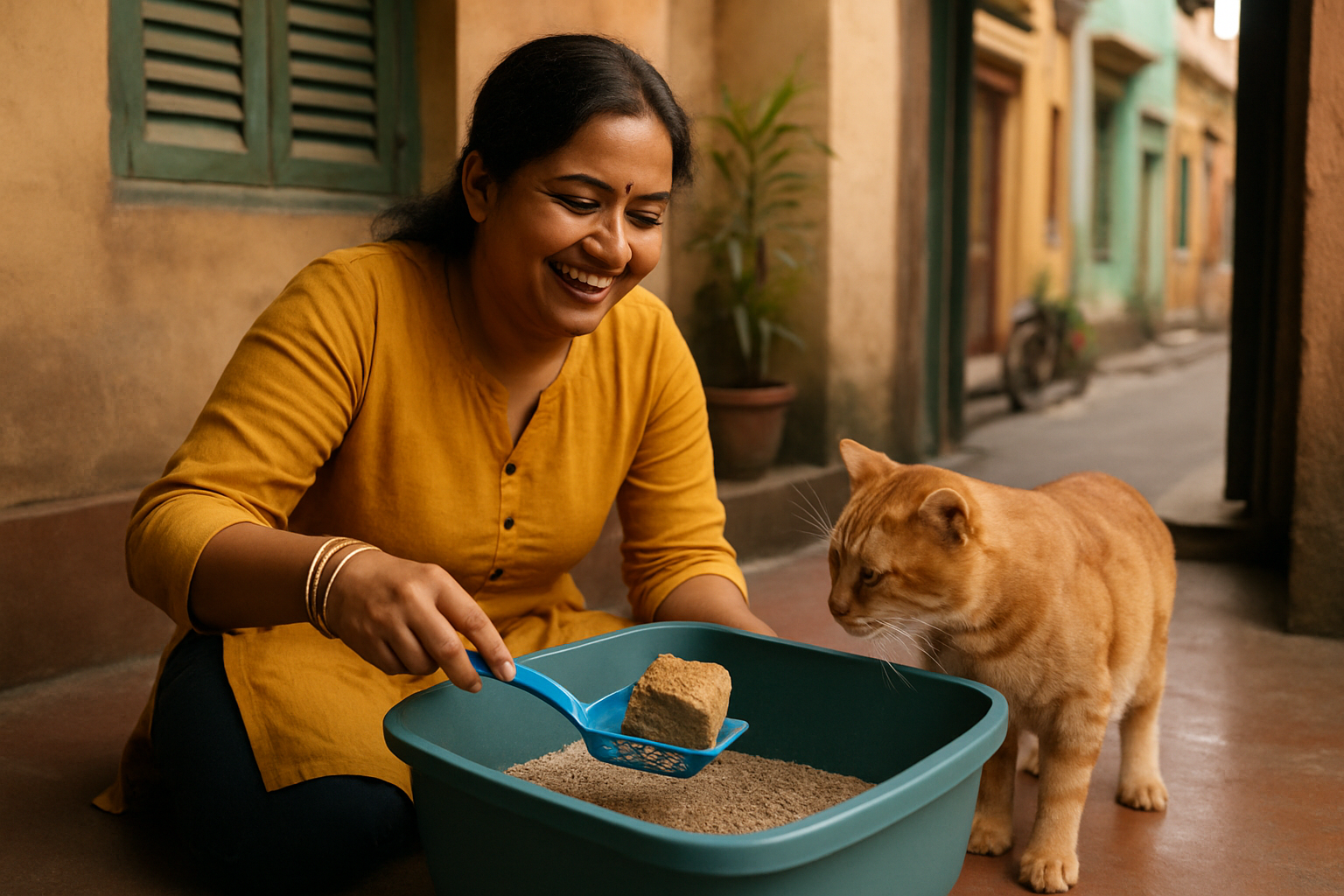
Most cat litter guides online are written for drier climates or generic "Indian" audiences that lump Kolkata in with Delhi or Bangalore. That's a problem, because a litter that performs beautifully in dry Rajasthan air can turn into a damp, ammonia-heavy mess in a Salt Lake or Behala apartment by day three. This guide skips the generic advice and gets specific about what actually works here.
The Litter Types, and How Kolkata's Humidity Changes the Math
Bentonite Clumping Clay
This is what most pet parents in India default to, and for good reason — it's the most popular choice among Indian cat parents, offering excellent clumping action and odor control that makes it well-suited to Indian apartments and homes. Clumping litter forms solid clumps when it comes into contact with moisture, making daily cleaning simple and reducing waste. In a humid city, that's actually an advantage: the litter is designed to absorb moisture and lock it into a scoopable clump rather than let it sit and ferment. The catch is dust and weight — bentonite bags are heavy and can be dusty, which matters if you live on an upper floor without a lift and are hauling supplies up regularly.
Crystal (Silica Gel) Litter
This is the litter that specifically shines in exactly the conditions Kolkata offers. Crystal cat litter or silica gel litter is perfect for India's humid climate, absorbing moisture effectively and controlling odors for longer periods, making it cost-effective for busy cat parents. The trade-off is texture — crystal litter is usually non-clumping, so cat parents just have to scoop poops and stir the litter daily to increase absorption and manage odors — and some cats simply don't like the feel of it underfoot compared to sand-like textures.
Tofu and Plant-Based Litters
Tofu litter has a loyal following because it's made from sustainable materials that would otherwise be discarded, and it's biodegradable, so it won't linger in a landfill like clay litter. It's also soft underfoot and does an excellent job of trapping odours, while being almost completely dust free, which makes it relatively safer in homes where respiratory issues are a concern. Here's the part most Kolkata-specific listicles skip entirely: because tofu litter is a plant-based material, it can be vulnerable to mold if stored in humid conditions. That's a real risk in a city where an unopened bag sitting in a monsoon-damp storeroom for a few weeks can develop mould before it ever touches the litter tray. If you go the tofu route here, buy smaller bags more often and store them somewhere genuinely dry — not under the sink, not in a ground-floor storage nook.
Cassava and Coconut-Fibre Blends
Newer plant-fibre blends clump fast and feel smooth, which is useful if you're weaning a cat off crystal litter. But while these litters clump fast and feel smooth, some formulas can feel sticky in humid rooms if the box is near a shower or laundry area. The fix in a humid climate is to place the box in a drier spot and keep the litter depth moderate, which tends to reduce wet patches that smear — genuinely practical advice if your litter tray currently lives in the bathroom, which is common in smaller Kolkata flats.
The Actual Problem: It's Rarely the Litter, It's the Humidity Around It
Vets and pet-care writers covering India's climate keep circling back to the same point: humidity can make litter damp and unpleasant, so the box needs to be cleaned regularly with wet or soiled litter replaced promptly, and keeping the litter area dry is especially important in this kind of weather. One India-focused cat blog put it plainly, describing the equation as "damp litter plus poor ventilation equals smelly disaster." That's true 12 months a year in Kolkata, not just June through September.
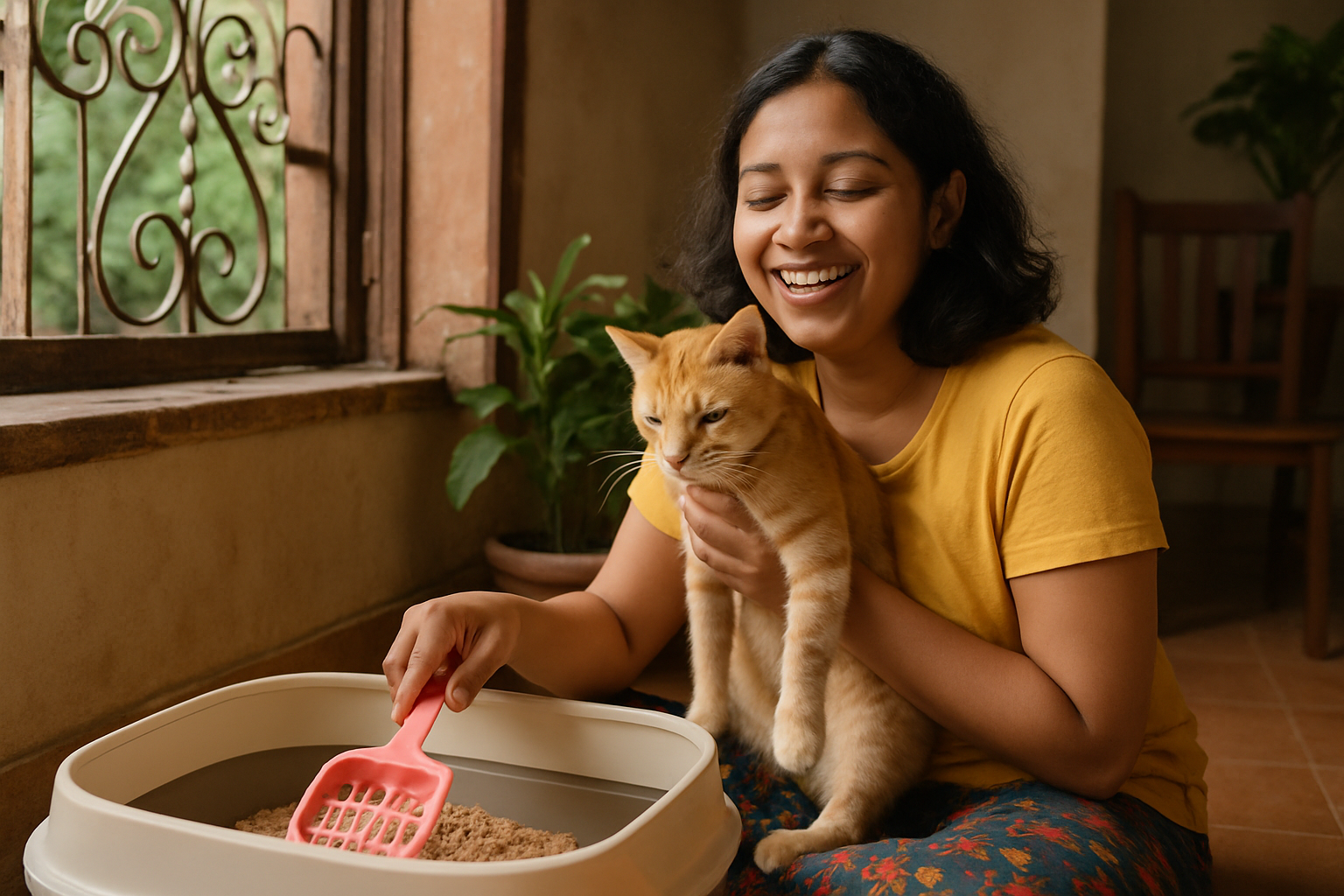
This also explains a behaviour problem many Kolkata cat parents mistake for "attitude" — a cat suddenly avoiding a box it's used for months. If a cat doesn't like the litter, it can start avoiding the litter box, resulting in stress as well as accidents, and a sudden change in smell or texture from humidity is often the trigger, not defiance.
A few adjustments that matter more here than in a drier city:
- Scoop twice a day, not once. Use a quality litter scoop to remove waste daily, and a litter deodorizer to help control odours. Replace the entire litter every 2–4 weeks, depending on the number of cats and the litter type — in Kolkata's humidity, lean toward the shorter end of that window.
- Watch the depth. A depth of approximately 5–7 cm is suitable for most litter boxes — too shallow and moisture reaches the tray floor fast; too deep and the bottom layer never dries out between changes.
- Move the box out of the bathroom or balcony if you can. Bathrooms and balconies are the most humid corners of any Kolkata flat, exactly where litter boxes tend to get placed for convenience.
- Choose based on ventilation, not just marketing. If your cat's litter corner genuinely doesn't get airflow, crystal or bentonite will outperform plant-based litters regardless of what the packaging promises.
A Quick Decision Guide for Kolkata Homes
- Ground floor or monsoon-damp storage space: Skip tofu and cassava bulk-buying; stick to bentonite clay or crystal, and buy smaller bags more frequently.
- Multi-cat household: Bentonite clumping clay is usually the most economical for volume, provided you're comfortable with the dust and weight.
- Respiratory-sensitive humans or cats in the house: Tofu litter's low dust is a genuine advantage — just be strict about storage and buy in smaller quantities.
- Busy household, can't scoop twice daily: Crystal litter's slower odour build-up makes it more forgiving of missed scooping sessions.
- Kitten or newly adopted cat transitioning from outdoors: A soft, sand-like texture helps encourage faster litter training, especially for kittens or rescued cats transitioning from outdoor life, and sand-textured litters also spread less dust.
Frequently Asked Questions
Is crystal or clumping clay litter better for Kolkata's humidity?
Crystal (silica gel) litter generally handles humidity best because it's built specifically for high moisture absorption, but bentonite clumping clay is a close second and more budget-friendly for multi-cat homes.
Can tofu cat litter go mouldy in Kolkata?
Yes, if stored improperly. Tofu litter is plant-based and can develop mould when kept in a humid storeroom or cupboard for extended periods, so buy smaller bags and store them in the driest part of your home.
Why does my cat's litter box smell stronger in Kolkata than it did elsewhere?
Ambient humidity slows evaporation and speeds up bacterial and ammonia buildup in used litter, which is why the same litter and the same scooping schedule can smell noticeably worse here than in a drier city.
How often should I change litter in a humid city like Kolkata?
Scoop at least once, ideally twice, daily, and plan for a full litter change closer to every two weeks rather than stretching to the four-week mark that's often recommended for drier climates.
Where should I place the litter box to reduce humidity problems?
Avoid bathrooms, balconies, and any spot without airflow. A well-ventilated corner of a bedroom or hallway, away from direct dampness, will keep litter drier for longer regardless of which type you choose.