
PinkPaws Store
Blog Details
Sep 09, 2026
One Loud Night: How Kolkata Pet Parents Can Prepare for Kali Puja and Diwali Falling Together in 2026
In 2026, Kali Puja and Diwali land on the exact same night in Kolkata — here's a science-backed, timeline-based plan to get anxious dogs, cats, and community dogs through it safely.
One Night, Twice as Loud: Why 2026 Is Different for Kolkata's Pets
Most years, Kolkata's pet parents get a slow build-up to the festive noise — Mahalaya, Durga Puja, then a short gap before Kali Puja and Diwali arrive close together but not identical. 2026 breaks that pattern. Kali Puja falls on Sunday, November 8, 2026, coinciding with Diwali, and takes a distinct Shakta path even though it lands on the same calendar day as Lakshmi Puja celebrated elsewhere in India. In practice, that means the cracker-bursting traditionally associated with both festivals is compressed into a single night instead of spread across two, with the most auspicious worship window falling around 11:39 PM to 12:31 AM — right when a lot of households are also lighting up the sky.
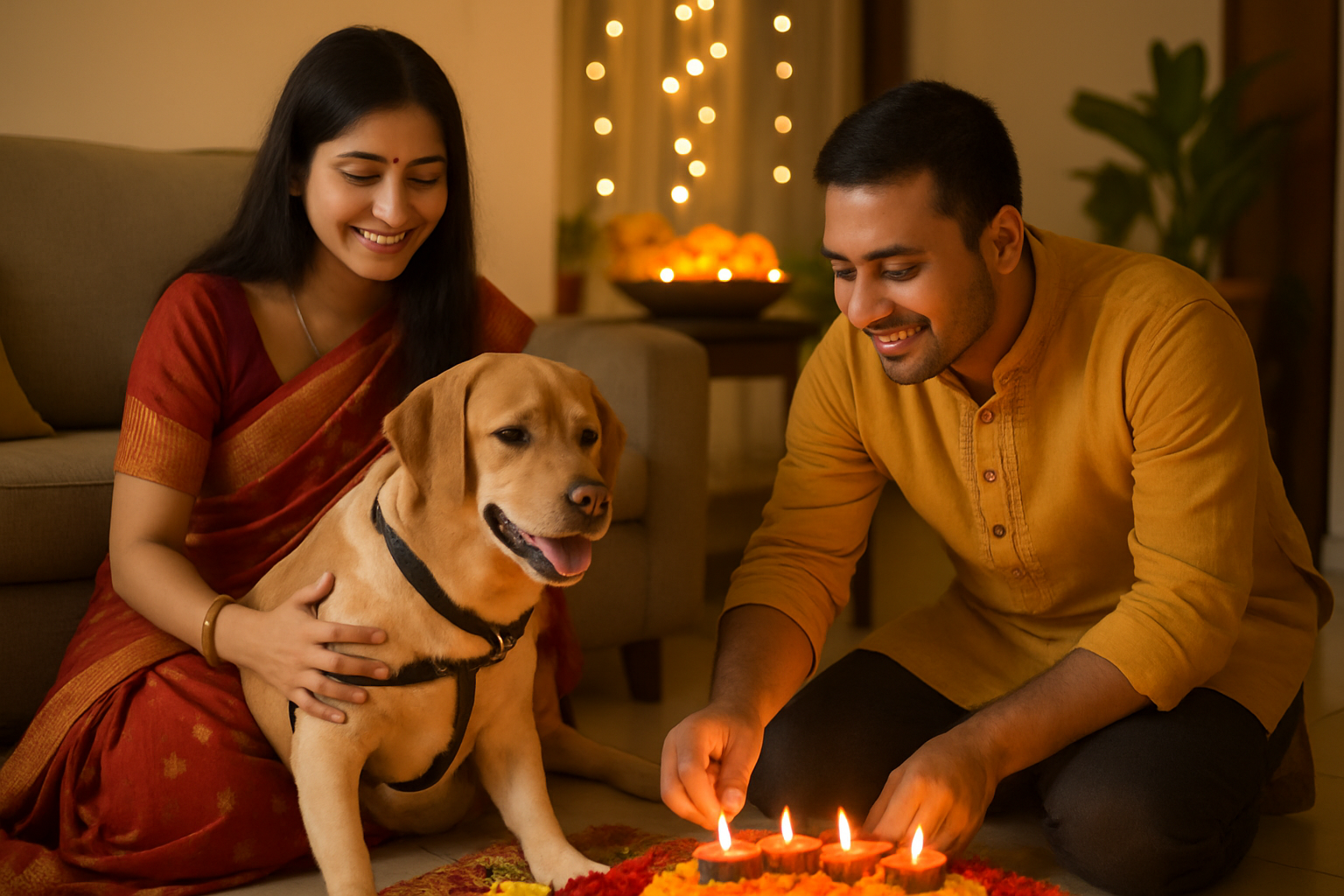
If you already dread the noise every year, this is the year to actually plan for it rather than white-knuckle it. This piece isn't another generic 'keep your pet calm during festivals' listicle — it's a specific, timeline-based plan built around what's actually different about Kolkata and about this particular year.
Why Kolkata's Crackers Hit Differently
Kali Puja isn't a quieter cousin of Diwali — it has its own pyrotechnic culture. The sutli bomb, one of the most popular firecrackers used during Diwali and other celebrations, is the noisiest type available, exceeding the permissible sound barrier of 145 decibels. That's louder than a jet engine at takeoff distance, and it's going off at street level, often just outside your building.
A Kolkata-based veterinarian put it plainly: loud noises and blinding lights coupled with a sudden rise in pollution affect cattle, birds, cats, dogs, and various other animals, agitating their nervous system and affecting their overall functioning. This isn't a minor inconvenience for pets — it's a genuine physiological stress event, and dogs with more sensitive hearing than ours experience it more intensely than we do.
It's also worth knowing what the law actually allows, because it shapes how much noise to expect. After the Calcutta High Court tried to impose a blanket ban on firecrackers during Kali Puja and Diwali, the Supreme Court set aside that order, ruling that a complete ban wasn't the answer and that West Bengal couldn't be treated as an exception to the national green-cracker framework. In theory, only certified low-emission 'green' crackers are legal. In practice, enforcement is inconsistent, and rescue workers still report deliberate cruelty — some people deliberately throw harmful crackers such as kali-photka or chocolate bombs at stray dogs and cats, and burnt strays are treated every year during the festival. If you feed or look after community dogs in your lane, this matters for them too, not just for the pet inside your flat.
What Noise Phobia Actually Looks Like
Not every anxious pet hides under the bed. Watch for:
- Trembling, panting, or drooling even in a cool room
- Pacing or trying to squeeze into tight spaces — behind the washing machine, inside cupboards, under sofas
- Destructive scratching at doors or windows, sometimes hard enough to injure paws
- Attempted escape — this is the dangerous one. During fireworks, many animals become frightened by the loud noises and run away from their homes; the lucky ones end up in shelters, but others are never found, and some suffer serious injuries or even die trying to escape the noise.
- Loss of appetite or refusal to go out for toilet breaks, which can persist for a day or two after the noise stops
Cats tend to freeze and go silent rather than panic visibly, which is often mistaken for 'being fine' when they're actually shut down with stress.
The Eight-Week Plan (Start Now, Not on November 7)
Because you have roughly two months before Kali Puja and Diwali land on the same night this year, you have real runway to desensitize rather than just manage the day itself.
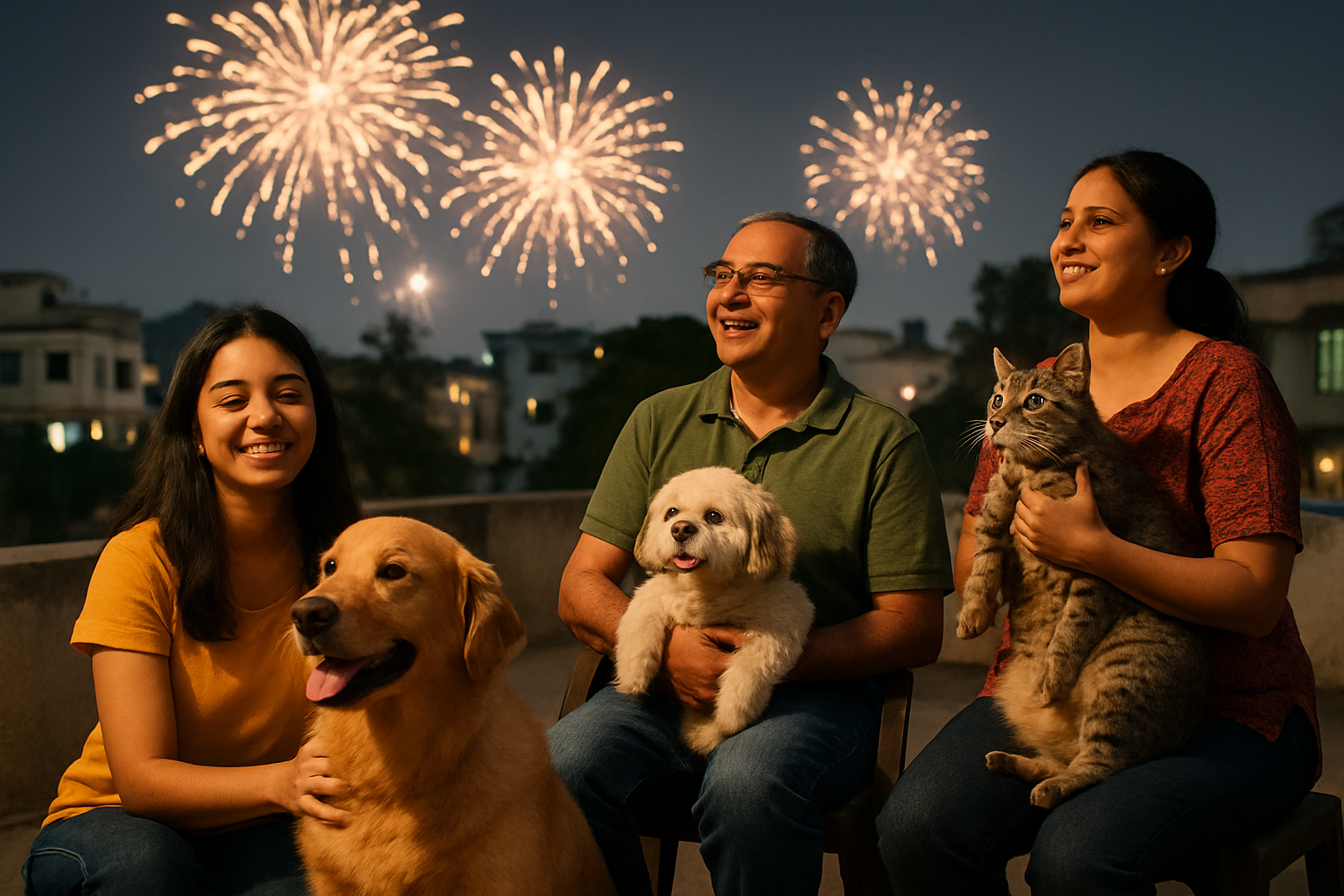
1. Week 1 — Now: Start Sound Desensitization
- Play recordings of distant firecracker or thunder sounds at a very low volume during normal daily activities like feeding or play.
- Stop immediately if your pet reacts fearfully and drop back to a lower volume.
2. Week 2 — Build a Safe Space
- Identify or create a “safe room” — ideally an interior room away from windows and balconies, with no direct line to the outside.
- Make the space comfortable with familiar bedding, toys, and water.
3. Week 3 — Continue Gradual Exposure
- Gradually raise the volume over several sessions while your pet remains calm.
- If your pet shows signs of fear, reduce the volume and progress more slowly.
4. Week 4 — Check Identification
- Update your pet’s collar tag and microchip details.
- If a bolt does happen, accurate identification information can help get them home.
5. Week 5 — Introduce Calming Aids
- Introduce any calming aids you plan to use, such as pheromone diffusers, calming chews, or anxiety wraps.
- Test them well before the night itself, since most take days of consistent use to show an effect, not minutes.
6. Week 6 — Prepare for Real-World Noise
- Do a “dry run” evening walk earlier than usual.
- Pre-Kali Puja weeks can bring scattered testing of crackers in the neighborhood, so gradually prepare your pet for unexpected sounds.
7. Week 7 — Practise the Night-Time Routine
- Walk dogs well before dusk.
- Prepare the safe room, close windows and curtains, and have a fan, TV, or music ready to mask sharp cracks.
8. Week 8 — The Night Itself
- Walk dogs well before dusk and aim to be indoors before the main evening fireworks period.
- Stay with your pet in the safe room if possible — your calm presence matters more than any product.
- Never force a hiding pet out to “face their fear,” and never punish anxious behavior; both can make the association with the noise worse, not better.
If You Care for Community Dogs
Kolkata's streets have a large population of dogs who don't have a flat to hide in. If there's a dog you regularly feed near your building, consider bringing them into a stairwell, garage, or ground-floor corridor for the worst hours, keeping water available, and checking on them the next morning for burn injuries — a real and recurring problem during this festival window, as rescue groups in the city report every year.
Frequently Asked Questions
Why do dogs react so strongly to Kali Puja crackers specifically?
Kali Puja's signature firecrackers, like the sutli bomb, are built to be as loud as possible — exceeding 145 decibels — and dogs hear frequencies and volumes far more acutely than humans do, which is why a single burst can trigger a full panic response.
Is it actually legal to burst firecrackers during Kali Puja in Kolkata?
Only certified 'green' crackers are legally permitted, following the Supreme Court's decision to allow limited firecracker use rather than a complete ban. Enforcement varies, so expect noise even in areas that are supposed to be compliant.
What should I do if my dog runs away during the fireworks?
Start with your building compound and immediate lanes, alert neighbors and local shopkeepers, post on local pet-parent groups, and check with area shelters and rescue NGOs — most successful reunions happen within the first 24–48 hours.
Do calming chews or pheromone diffusers really work?
They can meaningfully reduce mild-to-moderate anxiety when introduced days in advance and combined with a safe, quiet space — but they're a support tool, not a substitute for preparation, and severe phobia cases may need a vet-prescribed option.
How early should I start preparing my pet for this year's combined Kali Puja–Diwali night?
Begin gradual noise desensitization at least six to eight weeks out. Since the two festivals fall on the same night in 2026, there's no second 'quieter' evening to fall back on, so the prep work matters more than usual this year.