
Kolkata's Monsoon Is Still Hot: How to Keep Your Dog or Cat Cool and Hydrated
Blog Details
Aug 11, 2026
Kolkata's Monsoon Is Still Hot: How to Keep Your Dog or Cat Cool and Hydrated
Rain doesn't mean relief — Kolkata's monsoon humidity keeps the heat index dangerously high, so cooling and hydration matter just as much now as they did in peak summer. Here's what actually works.
Why Does Kolkata's Monsoon Still Feel So Hot for Pets?
It's easy to assume that once the rain starts, the heat danger for your pet is over. Kolkata's monsoon tells a different story. The average relative humidity through the monsoon months sits between roughly 83% and 95%, and that humidity is exactly what makes August one of the toughest months of the year for animals trying to cool themselves down.
Heat and humidity work together, not separately. Weather data for Kolkata in August puts the heat index — how hot it actually feels to a body trying to shed heat — at a punishing 46°C, even though the thermometer reading is closer to 32°C. Dogs and cats don't get the benefit of sweating the way humans do, so this gap between "air temperature" and "how it actually feels" matters far more for them than it does for us.
How Does Humidity Affect Heatstroke Risk in Dogs and Cats?
Dogs cool themselves mainly by panting, with a small amount of heat loss through their paw pads. When the air is already saturated with moisture, that cooling system loses efficiency fast. As one climate resource puts it, in high humidity the evaporation rate decreases, leading to increased body heat retention compared to drier conditions.
That's the mechanism behind monsoon heatstroke. A dog's internal temperature crossing 105.8°F is considered the threshold for heatstroke, and according to the American Kennel Club, this life-threatening condition can develop in minutes, especially in areas of high humidity or confined spaces. Cats are at risk too, though their symptoms tend to be quieter and easier to miss.
What Are the Early Signs of Heat Stress in a Pet?
Catching heat stress early is what keeps it from becoming an emergency. According to PetMD, heat stress is the first stage, marked by panting, increased thirst, and lethargy — well before it progresses to full heatstroke.
Cats are trickier to read. The Royal Veterinary College notes that signs are similar in dogs and cats, although in cats the signs are often more subtle — a cat quietly flattening itself against a cool floor is telling you something.
Watch for these signs and treat any of them as a reason to act immediately, not wait and see:
- Heavy or noisy panting that doesn't settle after rest
- Excessive drooling or thick, ropey saliva
- Restlessness, pacing, or seeking out tile floors and shade
- Vomiting, diarrhea, or sudden weakness
- Collapse, disorientation, or loss of coordination
Short-muzzled breeds — Pugs, Bulldogs, Persian cats — along with senior pets and overweight pets carry extra risk because they can't dissipate heat as efficiently. Cornell's Riney Canine Health Center confirms that short-muzzle breeds, older dogs, and overweight dogs are at a higher risk for heat stroke.
How Can I Keep My Pet Cool During Kolkata's Monsoon?
You don't need special equipment for most of this. You need a routine that respects how brutal humidity actually is, rain or no rain.
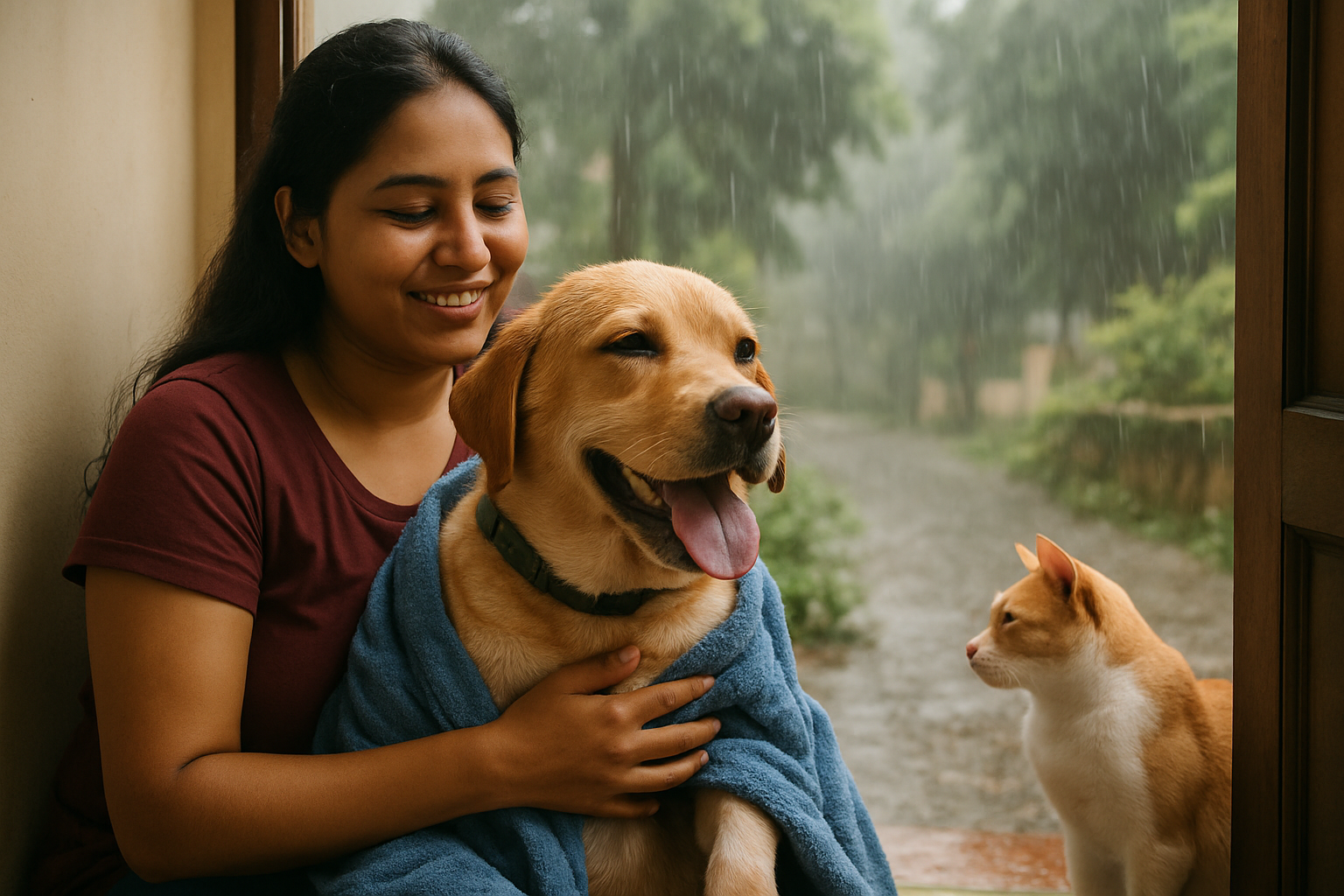
- Walk early morning or after sunset, when both temperature and humidity dip slightly and pavement has had time to cool
- Check pavement with the back of your hand — if you can't hold it there for 5 to 7 seconds, it's too hot for paws
- Keep indoor spaces ventilated; a fan plus cross-airflow does more in humid heat than people expect
- Never leave a pet in a parked car, even briefly, even with windows cracked
- If your pet does overheat, cool them with room-temperature water, not ice — ice can constrict blood vessels and trap heat inside instead of releasing it
- Skip strenuous play or long walks during the muggiest hours, typically late morning through mid-afternoon
If you ever suspect heatstroke, cooling is a first-aid measure only. Get to a vet immediately — this is a medical emergency, not something to manage at home.
How Much Water Does My Dog or Cat Actually Need Right Now?
This is where the monsoon misconception causes real harm. A lot of pet parents quietly reduce how often they refill bowls once the weather cools, assuming lower risk. That assumption is wrong, and it's worth saying plainly: hydration is just as important during the rainy season, especially for pets eating dry food.
As a baseline, dogs need roughly 1 ounce of water per pound of body weight per day, and active dogs exercising in warm, humid conditions can need up to 50% more than that resting baseline. For cats, the standard vet guideline from Zoetis Petcare is that most cats need about 4 ounces of water for every 5 pounds of body weight each day — a 10-pound cat needs roughly a cup.
These are starting points, not hard rules — activity, diet, and individual health all shift the number, so any dramatic change in drinking should go to your vet, not just to a hydration chart.
How Can I Get My Cat or Dog to Drink More Water?
Cats in particular are famously bad self-hydrators, which is a real problem in humid heat. A few small changes make a measurable difference:
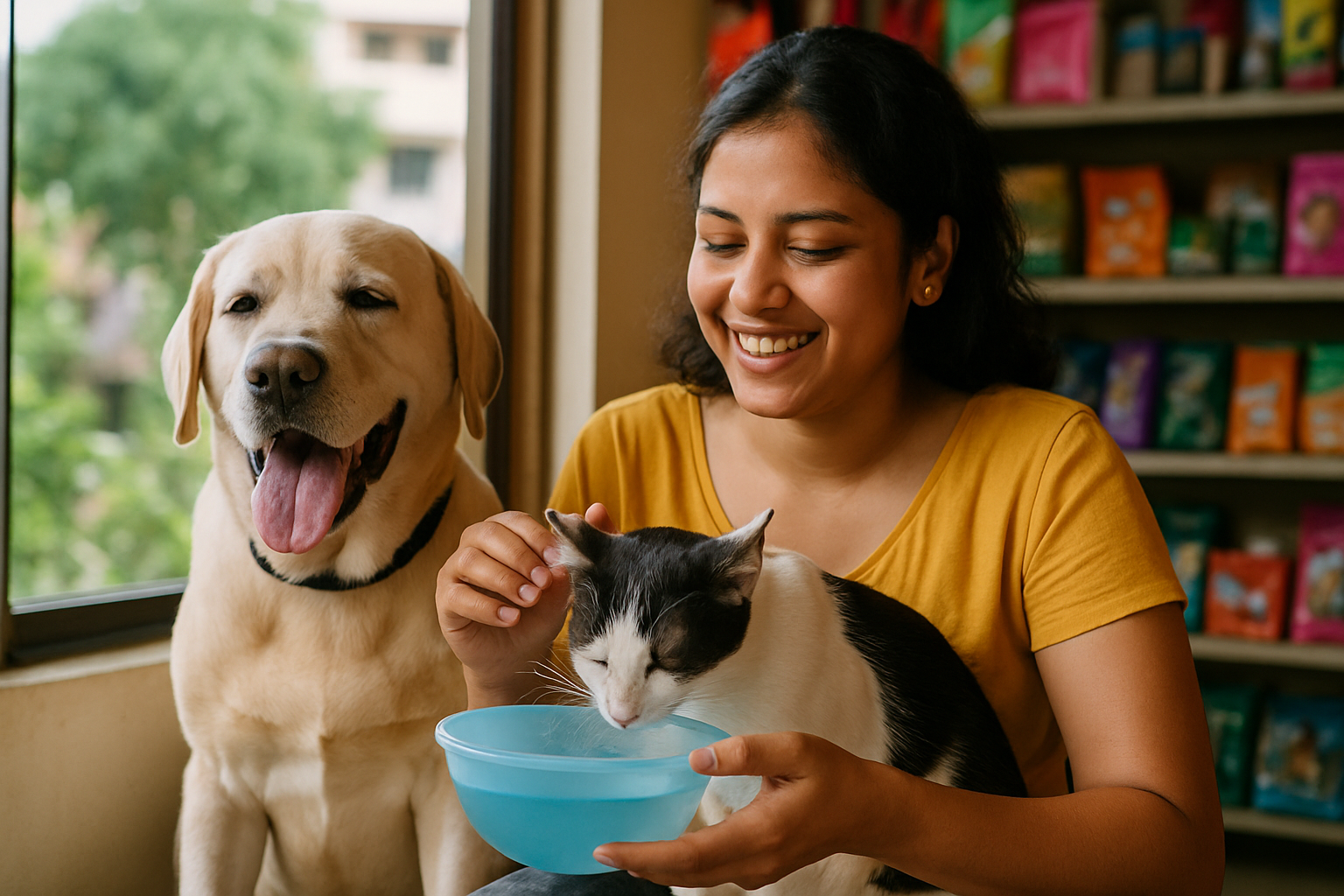
- Use wide, shallow bowls so whiskers don't touch the sides — many cats avoid narrow bowls for exactly this reason
- Wash water bowls daily and refill with fresh water; stale water in humid air picks up bacteria fast
- Offer more than one bowl in different, quiet locations away from litter boxes and food
- Try a pet water fountain — moving water is naturally more appealing to most cats
- Add a splash of wet food or a cat-safe, onion- and garlic-free broth to encourage extra intake
A stable, easy-to-clean water station matters more in monsoon than in dry weather, since humidity accelerates bacterial growth in standing water. If you're rethinking your setup this season, browsing ceramic and stainless-steel bowl options designed for easy daily washing is a practical place to start.
Frequently Asked Questions
Do dogs and cats need less water during Kolkata's monsoon?
No. It's a common but mistaken assumption — humidity keeps the heat index high and dry food doesn't provide much moisture, so hydration needs stay roughly the same as summer.
Can pets get heatstroke even when it's raining in Kolkata?
Yes. Heatstroke depends on heat and humidity trapping body heat, not on sunshine. Kolkata's monsoon humidity regularly sits in the 83–95% range, which is enough to push the heat index past 46°C even under grey skies.
How much water should my dog or cat drink each day in monsoon?
A rough guide is 1 ounce per pound of body weight daily for dogs, and about 4 ounces per 5 pounds for cats — more for active pets or those eating mostly dry food.
What are the early signs of heat stress in a dog or cat?
Heavy panting, increased thirst, drooling, and lethargy are the earliest signs. Cats show subtler cues like restlessness or seeking out cool floors, so check on quieter cats a little more closely this season.
If you're stocking up for the rest of monsoon, PinkPaws' bowls and hydration accessories are worth a look before the next heat spike hits.