
PinkPaws Store
Blog Details
Sep 07, 2026
Kolkata's Vaccination Rules Just Got More Serious: What Every Dog and Cat Owner Needs to Know
KMC registration is mandatory and tied to your pet's rabies certificate, and Kolkata's flood-prone monsoons change which leptospirosis vaccine your vet should actually be using. Here's the city-specific vaccination guide generic checklists skip.
Kolkata's Vaccination Rules Just Got More Serious. Is Your Pet Actually Covered?
Most vaccination guides written for "Indian pet parents" read the same everywhere — a generic chart, a line about rabies being important, and a reminder to "consult your vet." What almost none of them mention is that Kolkata has its own registration paperwork, its own flood-driven disease risk, and its own enforcement push happening right now. If you're only following a national checklist, you're missing half the picture.

The KMC Registration Rule Most Pet Parents Still Don't Know About
Dog registration with the Kolkata Municipal Corporation isn't optional paperwork you can get around to eventually — it's an annual legal requirement. Kolkata Municipal Corporation (KMC) make dog registration mandatory for all the pet dogs in Kolkata, and owners must register their pet annually from the first month of its age. Skip it, and you have to face penalties or fines imposed by KMC Kolkata.
Here's the part that trips people up: registration isn't just a form. The first and most important requirement is the vaccination proof — an updated anti-rabies vaccine certificate, issued by a certified veterinarian, which will be renewed annually. No current certificate, no valid registration.
This isn't unique to dogs owned within Kolkata proper, either. Just across the river, Howrah Municipal Corporation now mandates licences chiefly for foreign breeds like Labradors, German Shepherds, and Huskies alongside mixed-breed dogs, with an annual fee of Rs 150. And under West Bengal's housing society norms, pet parents must ensure their dog or cat is fully vaccinated — especially against rabies — annually, and keep records ready for their RWA if requested.
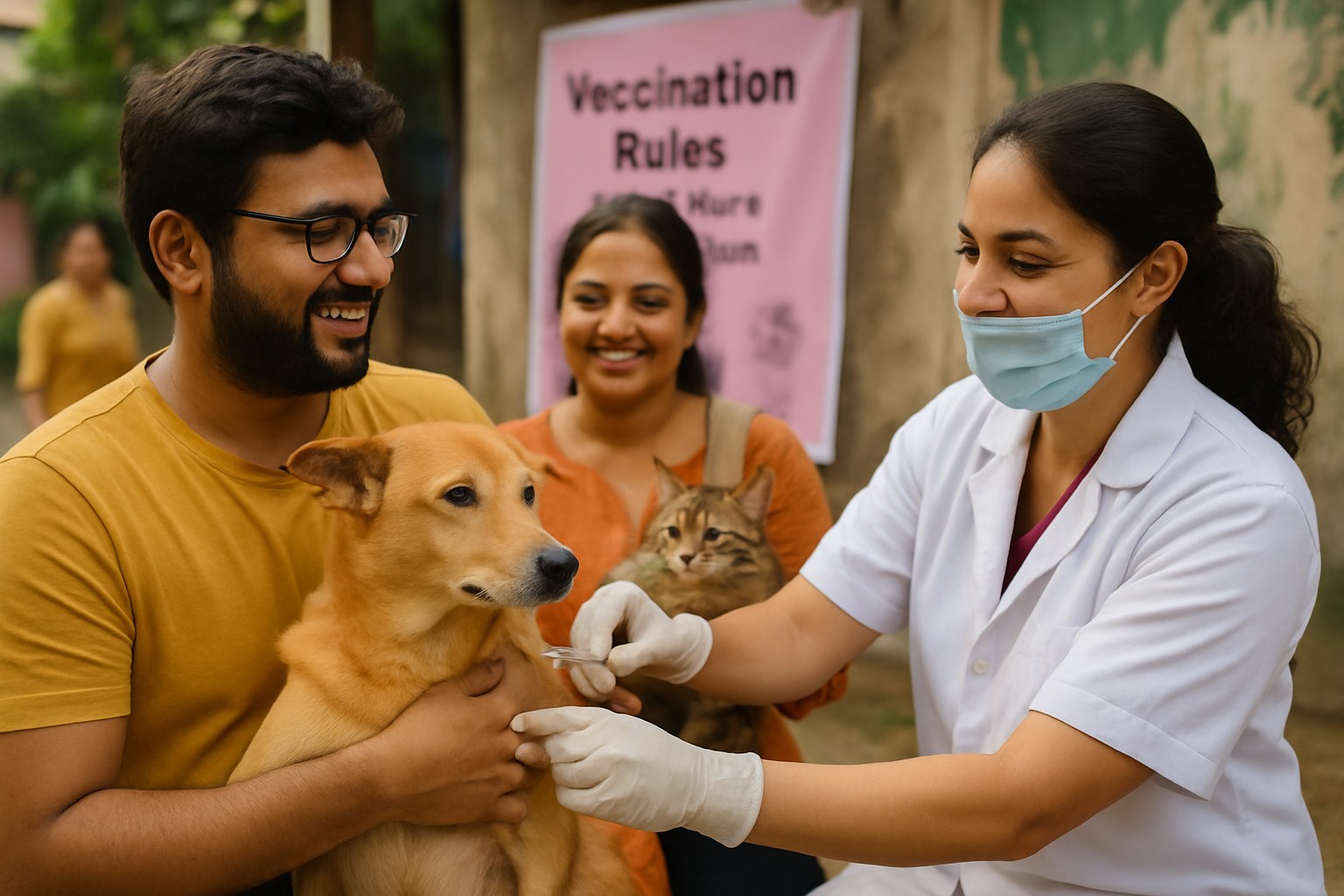
There's also a bigger civic push behind this. A recent Supreme Court order directed states and Union Territories to remove stray dogs from institutional premises and relocate them to designated shelters only after sterilisation and vaccination under the Animal Birth Control (ABC) Rules, 2023. KMC's response has been to run ward-level vaccination camps, which means rabies documentation is becoming a more visible, more checked requirement across the city — not less.
The Core Schedule Your Vet Is Probably Already Following
For puppies, most vets in India — and Kolkata is no exception — now follow a fairly standardized timeline. Puppies typically have a vaccine-free wellness visit at six weeks, begin core vaccinations at seven to eight weeks, get a second core dose at twelve weeks, start a two-dose rabies series at fourteen weeks, receive the single most important core dose at sixteen weeks, and complete the primary series at eighteen weeks with the second rabies dose and, typically, a kennel cough vaccine.
Cats follow a parallel but distinct path, and the "indoor cats don't need vaccines" idea is a myth worth killing early. Every cat in India needs two core vaccines — the FVRCP combination shot and the rabies shot — and this is true even for indoor cats. Kittens typically get their first core FVRCP vaccine at 6 to 8 weeks, with booster doses every 3 to 4 weeks until 16 to 20 weeks of age, plus a rabies shot from about 12 weeks. The reason indoor status doesn't grant immunity is simple: even strictly indoor pets are at risk because viruses can be carried in on shoes or clothes.
The One Vaccine Decision Kolkata Vets Should Actually Explain — But Often Don't
There's a specific fork in the road that matters more in Kolkata than in, say, Jaipur or Shimla: which leptospirosis vaccine your dog gets. Standard 2-strain (L2) protection is adequate in drier cities. It generally isn't enough here.
In flood-prone cities including Kolkata, the broader 4-serovar options (Nobivac L4 or Vanguard L4) justify the ₹100–200 premium per dose, because your dog wades through monsoon puddles and the added coverage pays for itself. This matters because leptospirosis isn't a minor bug — it's the bacterial infection that turns "my dog was playing in a puddle" into a kidney or liver emergency, and it's more common in warm climates with high annual rainfall, occurring especially after heavy rainfall and flooding. A city where waterlogged streets are a monsoon fixture is exactly the environment this bacterium thrives in.
If your vet hasn't specifically asked which lepto vaccine they're stocking or brought up L4 versus L2, it's worth asking. It's a five-minute conversation that changes what your dog is actually protected against for the next twelve months.
When to Actually Book the Booster
Timing matters as much as the vaccine itself. The single most important scheduling decision is getting the annual booster in March or April, timing it before the monsoon leptospirosis season, since that immunity is critical going into the rains.
- March–April: Book the annual booster before the monsoon season begins.
- Why this timing matters: Leptospirosis risk increases during the rainy season, so having immunity in place before the rains is important.
- Avoid waiting until July: If you book the booster after the rains have already started, your dog may have already spent weeks walking through puddles and being exposed during the highest-risk period.
Vaccination Costs in India
- Puppy vaccination: A full puppy vaccination series, including three DHPPiL doses plus rabies, typically costs ₹1,800–₹4,500, depending on your city.
- Cat vaccination: A full first year of vaccinations usually costs around ₹1,500–₹3,000.
- Annual boosters: Booster vaccinations generally cost less than the initial vaccination series.
Frequently Asked Questions
Is pet vaccination legally mandatory in Kolkata?
Rabies vaccination is the legal baseline. Rabies is the only legally required vaccine in India, but in Kolkata it's enforced through the KMC registration process, which will not approve or renew your dog's registration without a current anti-rabies certificate.
What vaccines does KMC ask for when registering a dog?
The core requirement is proof of vaccination — specifically an updated anti-rabies vaccine certificate issued by a certified veterinarian, renewed annually — along with your ID and address proof and details about the dog.
Does my indoor cat really need core vaccines?
Yes. Every cat in India needs the FVRCP combination shot and the rabies shot, even if they never go outdoors, since viruses and rabies exposure risk can enter through visitors, other pets, or contaminated objects.
Why does my vet suggest a different leptospirosis vaccine than what my friend in Pune uses?
Regional flood risk. Flood-prone cities like Kolkata benefit from the broader 4-serovar lepto vaccine because dogs regularly wade through monsoon puddles, while drier cities can reasonably use the narrower, cheaper version.
What happens if I don't register my dog with KMC?
Owners who skip registration face penalties or fines imposed by KMC, and an unregistered pet also won't have the paper trail needed if it ever gets lost, injured, or involved in a bite incident.
When is the best time to get the annual booster before monsoon?
Aim for March or April — that gives full immunity time to build before the leptospirosis risk window opens with the first heavy rains.
The Bottom Line
A national vaccination chart will get the timing roughly right. It won't tell you that KMC ties registration to your rabies certificate, that Howrah is now enforcing licences for specific breeds, or that the leptospirosis vaccine your vet stocks should be chosen with Kolkata's flooding in mind. Ask your vet these three specific questions at the next visit — which lepto vaccine, when the booster's actually due, and whether your KMC registration is current — and you've closed most of the gaps a generic guide leaves open.