
PinkPaws Store
Blog Details
Sep 07, 2026
Premium, Human-Grade, Holistic: What Pet Food Labels Actually Mean (By Law) in India
India's pet food market is booming on premium and 'human-grade' claims, but almost none of that language is legally regulated — here's what's actually required on a label and how to read past the marketing.
Why Your ₹1,400 Bag of "Premium" Dog Food and Your ₹450 Bag Might Contain Almost the Same Thing
Walk through any pet aisle — or scroll any pet store online — in 2026 and you'll see the same words repeated on nearly every bag: Premium. Human-Grade. Holistic. Natural. Super-Premium. India's pet food market is in the middle of a genuine premiumization wave — premium and super-premium pet food segments grew at over 20% annually in 2024, significantly outpacing overall market growth. Functional treats with probiotics and single-protein recipes have gone from a rounding error to a real category: these formulations, which had minimal shelf presence in 2020, surged to represent 18% of specialty-store revenue by 2025.
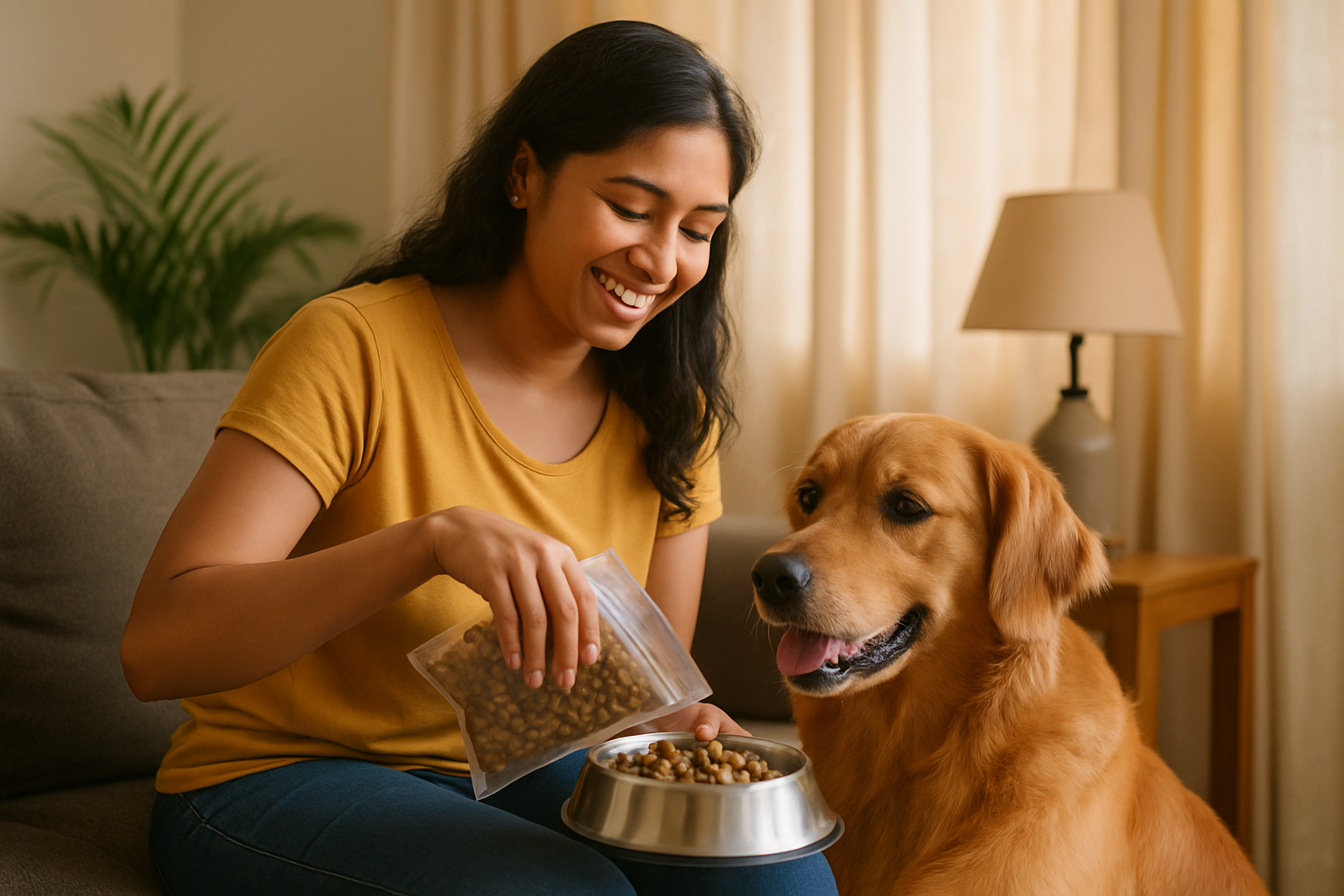
That growth is real. What's murkier is what these words are actually obligated to mean once they're printed on a bag sold in Kolkata. The honest answer, for most of them: legally, almost nothing.
The Regulatory Reality Nobody Puts on the Front of the Pack
In the US, pet food labeling has an actual referee. AAFCO — the body that governs feed labeling there — formalized "human grade" as a labeling claim in 2019, requiring every ingredient to be legally edible for humans and the finished product to be prepared in compliance with human-edible-food regulations. It's one of the only pet food terms anywhere in the world with real teeth behind it.
India doesn't have an equivalent. There is a voluntary Indian Standard — IS 11968:2019, which is voluntary but aligns with the BIS pet food guidelines and the FSSAI approach to regulating food safety hazards of ingredients of animal origin in pet food — but compliance isn't compulsory. Food safety regulations for hygienic processing, labeling, and contamination controls for pet food are enforced in India by FSSAI under the Food Safety and Standards Act, 2006, but FSSAI does not have any statutory regulation of pet foods per se — it enforces general safety provisions like manufacturing practices, microbial safety, contaminant limits, and labeling requirements under other acts. In plain terms: there's someone checking that your dog's food isn't contaminated or grossly mislabeled, but nobody is checking whether "human-grade" or "holistic" on the front of the bag means anything at all.
That's not a uniquely Indian problem, either. Even in the US, where the rules are tighter, terms like "holistic," "premium," and "ultra-premium" are pure marketing with no legal definition — a manufacturer can print them on any bag regardless of what's inside. In India, "human-grade" itself falls into that same bucket: it's a term meaning ingredients are fit for human consumption, but it isn't a defined pet food category in India the way it now technically is in the US.
What's Actually Required on an Indian Pet Food Label
So if the aspirational words aren't regulated, what is? Under the BIS framework, the mandatory disclosures are much more basic than the marketing copy suggests. Labels must state the product type — "Complete Pet Food" or "Complementary Pet Food" — the species and life stage it's intended for, and manufacturer information including name, address, and license number. That's the floor. Everything above that — "grain-free," "holistic," "vet-recommended," "human-grade" — is the manufacturer's own claim, unverified by any third party unless the brand voluntarily submits for BIS certification.
This matters practically because the same regulatory gap that lets a genuinely high-quality brand call itself "premium" also lets a mediocre one do the same thing for the same reason: nobody's stopping either of them.
A Working Checklist for Reading Past the Buzzwords
When you're comparing bags — especially online, where you can't pick one up and smell it — a few checks tell you more than the front-of-pack language ever will:

- Ignore "holistic," "gourmet," and "wholesome" entirely. These carry no enforceable meaning anywhere, India included.
- Read the guaranteed analysis, not the tagline. Protein, fat, fibre, and moisture percentages tell you more about what you're actually feeding than any adjective on the front.
- Check for a named protein source and its position in the ingredient list. "Chicken meal" listed first is a stronger signal than "meat and animal derivatives" buried lower.
- Look for the mandatory basics. A legitimate product will clearly state whether it's a complete or complementary food, the life stage it's formulated for, and a traceable manufacturer address and license number — the things that actually are required.
- Treat "human-grade" as a claim to verify, not a fact to trust. Ask the brand (or the store selling it) whether the ingredient sourcing and facility standards behind that claim are documented anywhere, since no Indian body currently certifies it.
- Weigh price against what you can verify, not against what the label implies. Premium pricing should track verifiable protein quality and sourcing transparency — not just the number of aspirational words on the pack.
Why This Matters More for Treats Than Meals
The label-claims problem is sharpest in the treats aisle, which is exactly where India's premiumization trend is moving fastest right now. Functional treats built around probiotics, prebiotics, and single-protein recipes are one of the fastest-growing categories in Indian pet retail, and millennial and Gen Z pet parents — who now make up the majority of first-time adopters — are actively seeking grain-free formulations, single-protein recipes, and functional treats enriched with probiotics or omega-3 fatty acids. That's a category where "functional," "gut-health," and "vet-formulated" get printed on packaging with even less scrutiny than main meals get, simply because treats are treated as a minor purchase rather than core nutrition — even though a dog eating three or four treats a day is getting a meaningful slice of its daily intake from a product with looser labeling norms than its actual dinner.
Frequently Asked Questions
Is "human-grade" pet food actually regulated in India?
No. Unlike in the US, where AAFCO defines and enforces the term, "human-grade" is not a defined pet food category in India, so any brand can use the phrase without third-party verification.
Does FSSAI approve or certify individual pet food products in India?
FSSAI does not have statutory regulation of pet foods specifically — its jurisdiction covers general food safety provisions like hygiene, contamination limits, and basic labeling accuracy, not front-of-pack marketing claims.
What pet food label information is legally required in India?
Under BIS guidance, labels must state whether the product is a "Complete Pet Food" or "Complementary Pet Food," the species and life stage it's intended for, and manufacturer name, address, and license number. Everything beyond that is a voluntary claim.
Is the BIS pet food standard (IS 11968:2019) mandatory?
No. IS 11968:2019 is a voluntary guidance issued by BIS for pet food manufacturers, and compliance with it is not mandatory, though many manufacturers use it as a quality benchmark.
Should I avoid a brand just because it uses words like "premium" or "holistic"?
Not necessarily — many genuinely good products use this language too. The point is that the word itself proves nothing; check the guaranteed analysis, ingredient list, and manufacturer transparency instead of trusting the adjective on the front.